
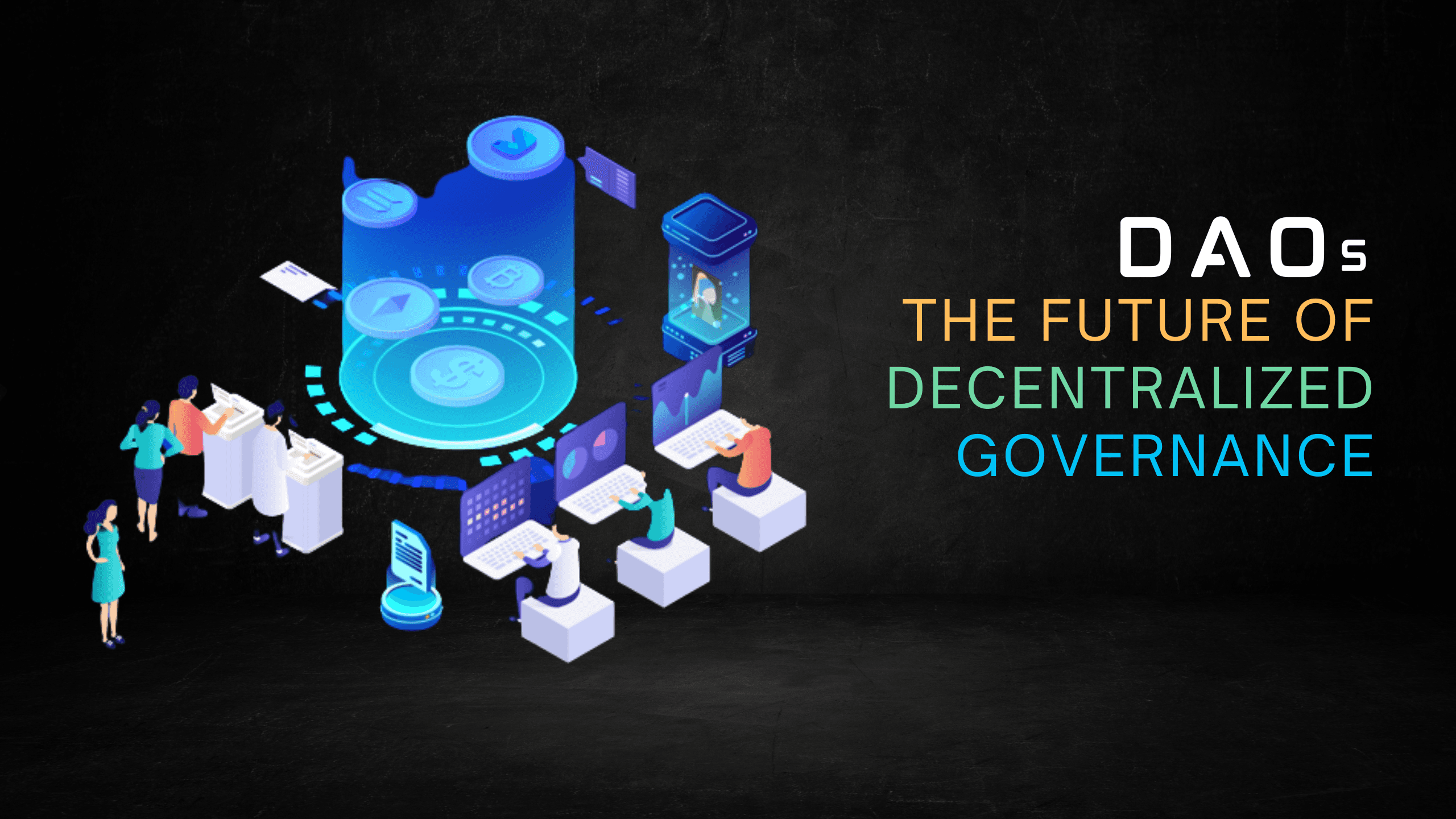
Imagine a world where decisions aren't made behind closed doors by a select few, but rather by a collective of individuals, all with a vested interest and a voice that matters. This isn't some utopian dream; it's the promise of decentralized autonomous organizations (DAOs) and a glimpse into the future of governance.
Let's face it, the current landscape of governance, whether in corporations, communities, or even nations, often feels opaque and frustrating. Bureaucracy, slow decision-making, and a lack of transparency can leave individuals feeling powerless and disconnected. The dream of actively participating in shaping the world around us sometimes feels distant.
So, whatcanwe expect from the future of governance, particularly with the rise of DAOs? This blog post will explore the potential of DAOs to revolutionize how we make decisions, organize communities, and even run businesses. We'll delve into the challenges, the opportunities, and the concrete steps being taken to build a more decentralized and participatory future.
In essence, the future of governance, powered by DAOs, promises increased transparency, greater inclusivity, and faster, more efficient decision-making. While challenges remain in terms of scalability, security, and legal frameworks, the potential benefits of this shift are undeniable. Expect to see DAOs playing a larger role in various sectors, from finance and technology to social impact and community building, reshaping how we organize and interact with each other.
The Rise of Decentralized Decision-Making
The rise of decentralized decision-making is really fascinating. I remember attending a local town hall meeting a few years ago, excited to contribute to a discussion about improving our community park. The reality, however, was far from empowering. The meeting was dominated by a few vocal individuals, the agenda felt pre-determined, and any dissenting opinions were quickly dismissed. It left me feeling disillusioned and questioning the effectiveness of traditional governance models. This is precisely where DAOs offer a compelling alternative. DAOs leverage blockchain technology to create transparent and immutable voting systems, allowing every member to participate in decision-making processes. Proposals are submitted, debated, and then voted on by token holders, ensuring that the collective will of the community prevails. This isn't just about casting a vote; it's about actively shaping the direction of the organization. Think of it as a digital town hall, but with verifiable results and greater inclusivity. The potential for this model to democratize decision-making across various sectors is truly transformative. The key keywords here are decentralization, transparency, blockchain, voting, and community.
Challenges and Opportunities in DAO Governance
The Future of Governance and DAOs: What You Should Expect is not without its challenges. While the promise of decentralized decision-making is appealing, translating that into effective and sustainable governance structures requires careful consideration. One major hurdle is scalability. As DAOs grow in size, managing discussions, coordinating proposals, and ensuring informed voting become increasingly complex. Another challenge lies in security. DAOs, being built on blockchain, are vulnerable to hacks and exploits if not properly secured. Smart contract vulnerabilities can lead to significant financial losses and erode trust in the system. Furthermore, the legal and regulatory landscape surrounding DAOs is still evolving. Defining the legal status of DAOs and clarifying issues of liability and accountability is crucial for their widespread adoption. However, these challenges also present significant opportunities for innovation. Developing more efficient governance tools, strengthening security protocols, and establishing clear legal frameworks will pave the way for DAOs to become a mainstream force in governance. The key keywords are scalability, security, legal frameworks, challenges, and opportunities.
The History and Mythology of DAOs
While DAOs may seem like a futuristic concept, the underlying principles of decentralized governance have roots in ancient history and mythology. Think of ancient Greek city-states, where citizens participated directly in decision-making through assemblies and councils. While not directly analogous to DAOs, these systems embodied the spirit of collective governance and distributed power. Even in mythology, we find examples of collaborative decision-making and community-driven action. The story of King Arthur and the Knights of the Round Table, while fictional, illustrates the ideal of a council of equals working together for a common purpose. These historical and mythical precedents highlight the enduring human desire for participatory governance and the inherent limitations of centralized power structures. The emergence of DAOs can be seen as a modern iteration of this age-old quest, leveraging technology to create more inclusive and democratic systems of decision-making. However, it's important to learn from the successes and failures of past governance models to avoid repeating mistakes and to build more robust and sustainable DAOs. The key keywords are history, mythology, decentralized governance, collective decision-making, and ancient civilizations.
Unlocking the Secrets of Effective DAO Governance
The "secret" to effective DAO governance isn't really a secret at all; it's about consciously designing systems that foster participation, transparency, and accountability. One crucial element is clear and concise communication. DAOs often operate in a decentralized and distributed environment, so effective communication channels are essential for keeping members informed and engaged. This includes using various platforms like forums, chat groups, and video conferences to facilitate discussions and share information. Another important aspect is establishing clear roles and responsibilities. While DAOs aim to be decentralized, it's still necessary to define who is responsible for specific tasks and to ensure that individuals are accountable for their actions. This can be achieved through delegation, committees, or even smart contracts that automate certain functions. Finally, fostering a culture of experimentation and learning is critical for DAO success. DAOs are still a relatively new phenomenon, and there's no one-size-fits-all approach to governance. DAOs should be willing to experiment with different models, to learn from their mistakes, and to continuously improve their processes. The key keywords are effective governance, communication, transparency, accountability, and experimentation.
Recommendations for Building a Successful DAO
Building a successful DAO requires a thoughtful and strategic approach. First and foremost, clearly define the purpose and mission of your DAO. What problem are you trying to solve? What goals are you trying to achieve? A well-defined mission will provide a guiding principle for all your decisions and attract like-minded individuals to your community. Secondly, carefully design your governance structure. Consider factors such as voting mechanisms, quorum requirements, and dispute resolution processes. Choose a model that aligns with your DAO's mission and values, and that encourages active participation from members. Thirdly, invest in community building. A strong and engaged community is the lifeblood of any successful DAO. Foster a culture of collaboration, communication, and mutual respect. Encourage members to contribute their skills and expertise, and provide opportunities for them to connect and build relationships. Finally, prioritize security. DAOs are vulnerable to hacks and exploits, so it's essential to implement robust security measures to protect your assets and data. This includes auditing your smart contracts, using multi-signature wallets, and educating your members about security best practices. The key keywords are successful DAO, mission, governance structure, community building, and security.
Choosing the Right Governance Model
Choosing the right governance model is a critical step in building a successful DAO. There are several different models to choose from, each with its own strengths and weaknesses. One popular model is the token-weighted voting system, where members' voting power is proportional to the number of tokens they hold. This model is simple to implement and encourages token holders to actively participate in governance. However, it can also lead to situations where a small number of large token holders have disproportionate influence. Another model is the quadratic voting system, which aims to address the issue of wealth concentration by giving more weight to individual votes. In this system, the cost of each additional vote increases quadratically, making it more expensive for individuals to exert undue influence. A third model is the reputation-based voting system, where members' voting power is based on their reputation and contributions to the community. This model incentivizes members to be active and engaged, and it rewards those who contribute valuable insights and expertise. Ultimately, the best governance model for your DAO will depend on its specific mission, values, and community. It's important to carefully consider the pros and cons of each model before making a decision, and to be prepared to adapt your governance structure as your DAO evolves. The key keywords are governance model, token-weighted voting, quadratic voting, reputation-based voting, and decentralized decision-making.
Tips for Fostering Active Participation in Your DAO
Getting people to actively participate in a DAO can be a challenge, but there are several strategies you can employ to encourage engagement. Firstly, make it easy for members to understand and contribute to the DAO's activities. Provide clear and concise information about proposals, voting processes, and other key decisions. Use visual aids, tutorials, and other resources to help members get up to speed quickly. Secondly, create opportunities for members to connect and build relationships. Host regular online and offline events, create discussion forums, and encourage members to share their ideas and feedback. A strong sense of community will foster a sense of belonging and encourage members to actively participate. Thirdly, reward members for their contributions. Recognize and appreciate members who contribute valuable insights, participate in discussions, and help to advance the DAO's mission. Consider using token rewards, reputation points, or other incentives to motivate participation. Finally, be responsive to member feedback. Regularly solicit feedback from members about the DAO's governance processes, communication channels, and other aspects of the community. Use this feedback to make improvements and to ensure that the DAO is meeting the needs of its members. The key keywords are active participation, community engagement, incentives, feedback, and decentralized organizations.
Strategies for Conflict Resolution in DAOs
Conflict is inevitable in any organization, and DAOs are no exception. It's important to have clear and effective strategies for resolving conflicts to maintain a healthy and productive community. One approach is to establish a clear code of conduct that outlines acceptable behavior and consequences for violations. This code of conduct should be widely communicated and enforced consistently. Another strategy is to implement a dispute resolution process that allows members to raise concerns and seek redress. This process should be fair, transparent, and impartial, and it should provide opportunities for mediation and arbitration. A third approach is to use on-chain mechanisms for resolving disputes. This can involve using smart contracts to automatically enforce agreements, or using decentralized courts to adjudicate disputes based on evidence and community input. Finally, fostering a culture of open communication and mutual respect is essential for preventing conflicts from escalating. Encourage members to communicate openly and honestly with each other, to listen to different perspectives, and to seek common ground. The key keywords are conflict resolution, code of conduct, dispute resolution process, on-chain mechanisms, and decentralized governance.
Fun Facts About DAOs
Did you know that the first DAO, simply called "The DAO," was launched in 2016 and aimed to be a decentralized venture capital fund? It raised over $150 million worth of Ether, making it one of the largest crowdfunding campaigns in history. However, it was later hacked due to a vulnerability in its smart contract, resulting in the loss of millions of dollars. Another fun fact is that some DAOs are using artificial intelligence (AI) to automate certain governance tasks. For example, AI can be used to analyze proposals, identify potential risks, and provide recommendations to voters. This can help to improve the efficiency and effectiveness of DAO governance. DAOs are also being used for a wide range of purposes, from managing decentralized finance (De Fi) protocols to governing online communities. Some DAOs are even being used to fund scientific research and to support charitable causes. The possibilities are endless! Finally, the legal status of DAOs is still evolving. Some jurisdictions recognize DAOs as legal entities, while others do not. This creates uncertainty and can make it difficult for DAOs to operate in certain regions. The key keywords are fun facts, The DAO, artificial intelligence, decentralized finance, and legal status.
How to Start Your Own DAO
Starting your own DAO can seem daunting, but it's actually easier than you might think. The first step is to define the purpose and mission of your DAO. What problem are you trying to solve? What goals are you trying to achieve? A well-defined mission will provide a guiding principle for all your decisions and attract like-minded individuals to your community. The second step is to choose a platform for your DAO. There are several different platforms to choose from, each with its own strengths and weaknesses. Some popular platforms include Aragon, DAOstack, and Colony. The third step is to create your DAO's governance structure. This includes defining your voting mechanisms, quorum requirements, and dispute resolution processes. Choose a model that aligns with your DAO's mission and values, and that encourages active participation from members. The fourth step is to launch your DAO and start building your community. Promote your DAO through social media, online forums, and other channels. Encourage people to join your community, to contribute their skills and expertise, and to participate in governance. Finally, be prepared to adapt and evolve. DAOs are still a relatively new phenomenon, and there's no one-size-fits-all approach to building a successful DAO. Be willing to experiment with different models, to learn from your mistakes, and to continuously improve your processes. The key keywords are start your own DAO, platform, governance structure, community building, and decentralized organizations.
What If DAOs Become the Dominant Form of Organization?
Imagine a world where DAOs are the dominant form of organization, replacing traditional corporations, governments, and other hierarchical structures. What would this world look like? Firstly, decision-making would become more decentralized and participatory. Individuals would have a greater say in the decisions that affect their lives, and power would be distributed more equitably. Secondly, organizations would become more transparent and accountable. All decisions and actions would be recorded on a public blockchain, making it easier to track and verify information. Thirdly, innovation would accelerate. DAOs would foster a culture of experimentation and collaboration, allowing for new ideas to emerge and to be tested quickly. Fourthly, trust would increase. Because DAOs operate on a transparent and immutable blockchain, trust would be built into the system. Individuals would be able to interact with each other and with organizations without having to rely on intermediaries. However, there would also be challenges. DAOs would need to address issues of scalability, security, and legal compliance. They would also need to find ways to prevent malicious actors from exploiting the system. Overall, a world dominated by DAOs would be a more democratic, transparent, and innovative world. The key keywords are DAOs, dominant form of organization, decentralization, transparency, innovation, and trust.
Top 5 Things to Know About the Future of DAOs
Here's a quick listicle of the most important things to know about the future of DAOs:
1.DAOs are going mainstream: Expect to see DAOs popping up in various sectors, from finance and technology to social impact and community building.
2.Governance will become more sophisticated: DAOs will develop more advanced governance mechanisms, such as quadratic voting, conviction voting, and liquid democracy.
3.Security will be paramount: DAOs will prioritize security to protect against hacks and exploits. This will involve auditing smart contracts, using multi-signature wallets, and implementing robust security protocols.
4.Legal frameworks will emerge: Governments and regulators will develop clearer legal frameworks for DAOs, clarifying issues of liability, taxation, and compliance.
5.AI will play a bigger role: DAOs will use AI to automate certain governance tasks, such as analyzing proposals, identifying risks, and providing recommendations to voters.
These five points are crucial for understanding the trajectory of DAOs and their potential impact on the future of governance. Keep these in mind as you explore the world of decentralized autonomous organizations. The key keywords are future of DAOs, mainstream, governance, security, legal frameworks, and artificial intelligence.
Question and Answer About The Future of Governance and DAOs: What You Should Expect
Q1: What are the biggest challenges facing DAOs right now?
A1: Scalability, security, and legal uncertainty are the main hurdles. DAOs need to find ways to handle large numbers of members and transactions, protect against attacks, and navigate the evolving regulatory landscape.
Q2: How can I participate in a DAO?
A2: Find a DAO that aligns with your interests and values. Purchase the DAO's governance token, which usually grants you voting rights. Actively participate in discussions, propose ideas, and vote on proposals.
Q3: Are DAOs just a fad?
A3: While the technology is still evolving, the underlying principles of decentralized governance and community ownership are powerful. DAOs have the potential to fundamentally change how organizations are structured and managed.
Q4: What are some examples of successful DAOs?
A4: Maker DAO, which governs the Dai stablecoin, is a well-known example. Compound and Aave are DAOs that govern decentralized lending protocols. Many other DAOs are emerging in areas such as art, music, and social impact.
Conclusion of The Future of Governance and DAOs: What You Should Expect
The future of governance is undeniably intertwined with the evolution of DAOs. While challenges remain, the potential for increased transparency, inclusivity, and efficiency is too significant to ignore. By understanding the key concepts, addressing the challenges, and actively participating in the DAO ecosystem, we can collectively shape a future where governance is truly decentralized and empowering for all.

