
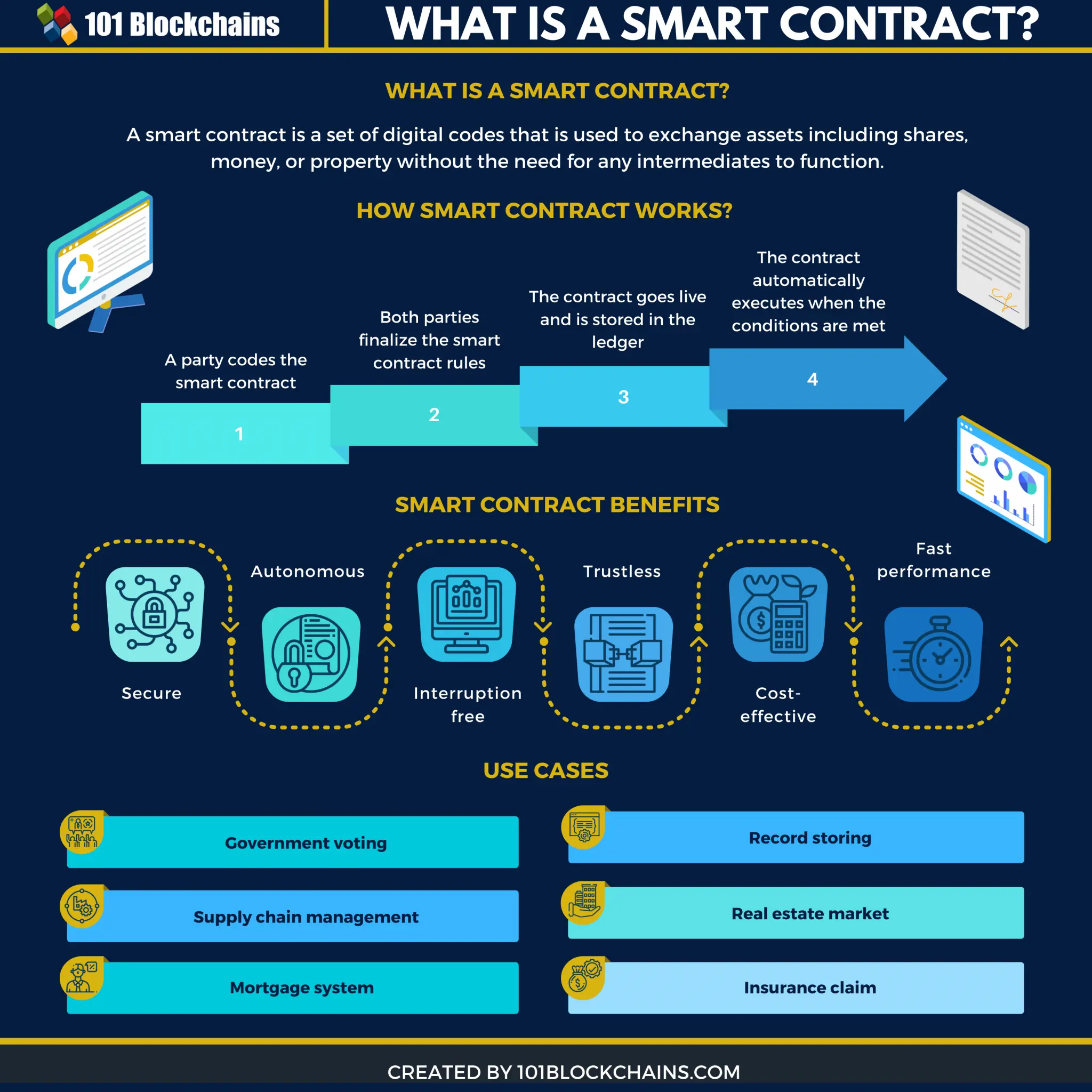
Imagine a world where agreements are self-executing, transparent, and tamper-proof, all thanks to lines of code. This isn't science fiction; it's the reality enabled by smart contracts! But where do you even begin if you're eager to build these revolutionary digital agreements?
The quest to create these "smart contracts" can often feel daunting. Sifting through complex documentation, understanding arcane syntax, and navigating the ever-evolving landscape of blockchain technology can leave aspiring developers feeling overwhelmed and unsure where to even begin. It’s easy to feel lost in a sea of jargon and technical complexities, hindering your progress and passion.
This guide is designed to be your friendly companion as you embark on your journey into the world of smart contract programming languages. We'll break down the essential concepts, explore popular language choices, and equip you with the knowledge you need to start writing your own smart contracts.
In this beginner’s guide, we'll explore the fundamental concepts of smart contract programming, touching upon popular languages like Solidity, Vyper, and Rust, as well as the importance of security audits and best practices. You'll gain a solid foundation for building decentralized applications (d Apps) and understanding the revolutionary potential of blockchain technology. This will cover the what, why, and how of smart contract programming languages!
What are Smart Contract Programming Languages?
I remember the first time I heard about smart contracts. I was at a tech conference, completely bewildered by all the blockchain buzzwords. A seasoned developer patiently explained that smart contracts were essentially code-based agreements that automatically executed when certain conditions were met. It sounded like magic! My initial reaction was similar to many newcomers: confusion mixed with a healthy dose of excitement. But the real turning point was when I understood the underlying languages that made it all possible.
Smart contract programming languages are specialized tools used to write the code that defines the rules and logic of a smart contract. Think of them as the building blocks for creating these self-executing agreements on a blockchain. These languages are designed to be deterministic, meaning that the same input will always produce the same output, ensuring predictability and reliability on the blockchain. They allow developers to define the terms of an agreement in code, automate the execution of these terms, and create decentralized applications (d Apps) that can't be easily censored or tampered with.
Consider Solidity, the dominant language for Ethereum. It's designed to be relatively similar to Java Script, making it easier for web developers to transition into the world of blockchain. Vyper, on the other hand, prioritizes security and simplicity, aiming to minimize potential vulnerabilities. Rust is also gaining popularity for its focus on performance and safety, making it suitable for more complex and demanding smart contract applications. Choosing the right language depends on the specific needs of your project, your existing programming experience, and the platform you're targeting. The key takeaway here is that understanding these languages is the first step toward unlocking the power of smart contracts.
Why Learn Smart Contract Programming Languages?
Learning smart contract programming languages opens doors to a world of possibilities. It's about more than just writing code; it's about participating in a revolutionary shift in how we interact and transact online. It's about building a more transparent, secure, and decentralized future. The demand for skilled smart contract developers is growing exponentially, making it a valuable skill to acquire. Not only can you build innovative d Apps, but you can also contribute to the evolution of blockchain technology itself.
Think about the industries ripe for disruption: finance, supply chain management, healthcare, voting systems, and more. Smart contracts can streamline processes, reduce costs, and increase transparency in these areas. By learning these languages, you're equipping yourself with the tools to create solutions that can address real-world problems. You'll be able to design and implement secure, automated agreements that can revolutionize how businesses operate and how individuals interact with each other. Moreover, the skills you gain will be highly sought after in a rapidly expanding job market, offering exciting career opportunities and the potential to shape the future of the internet. This skill is crucial for developers looking to lead this change.
The History and Myths of Smart Contract Programming Languages
The concept of smart contracts predates blockchain. Nick Szabo, a computer scientist, first proposed the idea in 1994, envisioning them as self-executing contracts that could automate various processes. However, it wasn't until the advent of blockchain technology that smart contracts became a practical reality. Bitcoin, while not explicitly designed for smart contracts, demonstrated the potential for decentralized, trustless systems. Ethereum then emerged as the first platform explicitly built to support complex smart contracts, paving the way for Solidity to become the dominant language.
One common myth is that smart contracts are inherently secure. While blockchain technology offers a high degree of security, smart contracts themselves can be vulnerable to bugs and exploits. A poorly written contract can be manipulated by malicious actors, leading to significant financial losses. The DAO hack, for example, exposed a vulnerability in a smart contract, resulting in the theft of millions of dollars worth of Ether. This highlights the importance of rigorous testing, security audits, and the use of secure coding practices. Another myth is that all smart contract languages are created equal. In reality, each language has its strengths and weaknesses, and the choice of language should depend on the specific requirements of the project. The myth of innate security is particularly dangerous, as it can lead to complacency and a false sense of security during development. Careful development practices and a deep understanding of security principles are crucial when building smart contracts.
Hidden Secrets of Smart Contract Programming Languages
One of the lesser-known aspects of smart contract programming is the gas optimization process. Gas, in the context of Ethereum, refers to the computational cost of executing a smart contract. Each operation performed by a smart contract consumes a certain amount of gas, and developers must pay for this gas using Ether. Therefore, writing efficient code that minimizes gas consumption is crucial for reducing transaction costs and ensuring the scalability of your d Apps. Optimizing gas usage involves techniques such as minimizing storage usage, using efficient data structures, and avoiding unnecessary loops.
Another hidden secret is the importance of formal verification. Formal verification involves using mathematical techniques to prove that a smart contract behaves as intended and is free from bugs. This is a more rigorous approach than traditional testing and can help identify subtle vulnerabilities that might otherwise go unnoticed. While formal verification can be complex and time-consuming, it's becoming increasingly important for critical applications where security is paramount. Furthermore, understanding the limitations of the Ethereum Virtual Machine (EVM) is also crucial. The EVM has certain constraints that can affect the performance and security of smart contracts. For example, the EVM has limited stack depth, which can prevent complex computations. Developers need to be aware of these limitations and design their contracts accordingly. Becoming proficient in gas optimization, formal verification, and understanding the EVM are essential skills for advanced smart contract developers.
Recommendations for Getting Started with Smart Contract Programming Languages
My top recommendation for beginners is to start with Solidity. It's the most widely used language for Ethereum, and there are abundant resources available online, including tutorials, documentation, and community forums. Platforms like Remix IDE provide a browser-based environment where you can write, compile, and deploy Solidity contracts without setting up a local development environment. This makes it easy to experiment with the language and learn the basics.
Once you have a grasp of Solidity, consider exploring other languages like Vyper or Rust. Vyper is a good choice if you prioritize security, while Rust is suitable for more complex and performance-critical applications. It's also important to learn about security best practices. Read about common vulnerabilities such as reentrancy attacks, integer overflows, and denial-of-service attacks. Use tools like static analyzers and fuzzers to identify potential vulnerabilities in your code. Participate in bug bounty programs to learn from the mistakes of others. Finally, don't be afraid to ask for help. The blockchain community is generally very supportive, and there are many online forums and communities where you can ask questions and get advice from experienced developers. Starting with Solidity, exploring other languages, learning security best practices, and engaging with the community are key steps to becoming a proficient smart contract developer.
Choosing the Right Language for Your Project
Selecting the right smart contract programming language isn't a one-size-fits-all decision. It hinges on several factors, including the complexity of your project, the target blockchain platform, and your personal programming background. For instance, if you're building a simple decentralized exchange (DEX) on Ethereum, Solidity might be the most logical choice due to its widespread adoption and extensive tooling. However, if your project requires higher security guarantees or more complex computational logic, Vyper or Rust might be more suitable.
Vyper, with its emphasis on security and readability, is often preferred for financial applications where avoiding vulnerabilities is paramount. Its limited feature set reduces the attack surface, making it easier to audit and verify the code. Rust, on the other hand, offers greater flexibility and performance, making it a good choice for applications that require complex data structures or computationally intensive operations. Another factor to consider is the ecosystem surrounding each language. Solidity boasts a vast ecosystem of libraries, frameworks, and tools, making development faster and easier. Vyper and Rust, while growing in popularity, have smaller ecosystems, which might require more custom development. Finally, your existing programming skills can influence your choice. If you're already proficient in Java Script, Solidity might be easier to learn, while developers familiar with low-level languages like C++ might find Rust more comfortable. Weighing these factors carefully will help you choose the language that best aligns with your project's needs and your personal expertise.
Tips for Writing Secure Smart Contracts
Writing secure smart contracts is paramount, as vulnerabilities can lead to significant financial losses and reputational damage. One essential tip is to follow the principle of least privilege, granting contracts only the necessary permissions to perform their intended functions. This minimizes the potential damage if a contract is compromised.
Another crucial tip is to implement thorough input validation. Always validate user inputs to prevent malicious data from being injected into your contracts. This includes checking data types, ranges, and formats. Use established security patterns and libraries whenever possible. These patterns have been rigorously tested and reviewed by the community, reducing the risk of introducing new vulnerabilities. Implement robust error handling to gracefully handle unexpected situations and prevent your contracts from crashing or behaving unpredictably. Conduct regular security audits by experienced professionals. A fresh set of eyes can often identify vulnerabilities that you might have missed. Furthermore, keep your smart contract code simple and easy to understand. Complex code is more likely to contain bugs and is harder to audit. Finally, stay up-to-date with the latest security threats and best practices. The blockchain security landscape is constantly evolving, and it's important to continuously learn and adapt your security measures. Adhering to these tips will significantly enhance the security of your smart contracts.
Common Vulnerabilities to Avoid
Several common vulnerabilities plague smart contracts, and understanding them is crucial for writing secure code. Reentrancy attacks, where a malicious contract calls back into the victim contract before the initial transaction is complete, are a frequent source of exploits. Integer overflows and underflows can lead to unexpected behavior and incorrect calculations. Denial-of-service (Do S) attacks can render your contracts unusable by exhausting their gas limits or exploiting other vulnerabilities.
Timestamp dependence, where contracts rely on block timestamps for critical decisions, can be manipulated by miners. Front-running attacks allow malicious actors to profit by observing pending transactions and executing their own transactions before the original ones. Gas limit issues can cause transactions to fail if they consume too much gas. Cross-function race conditions can occur when multiple functions modify the same state variables simultaneously, leading to inconsistent data. Unhandled exceptions can cause transactions to revert unexpectedly. It's essential to be aware of these vulnerabilities and implement appropriate safeguards to prevent them from being exploited. Using tools like static analyzers and fuzzers can help identify these vulnerabilities during development. Staying informed about the latest security threats and best practices is also crucial for mitigating these risks. By understanding and avoiding these common vulnerabilities, you can significantly improve the security of your smart contracts and protect your users from potential harm.
Fun Facts About Smart Contract Programming Languages
Did you know that the word "Solidity" was inspired by the concept of solidity in materials science? It reflects the idea of creating robust and reliable contracts. Another fun fact is that Vyper was designed with security as its primary focus, even at the expense of some features. Its creators deliberately limited the language's functionality to minimize potential vulnerabilities. Also, smart contracts aren't just for financial applications; they can be used for a wide range of purposes, including supply chain management, voting systems, and digital identity.
The first major smart contract hack, The DAO hack, led to a hard fork of Ethereum, creating Ethereum Classic. This event highlighted the importance of security audits and the potential consequences of vulnerabilities in smart contracts. Moreover, smart contract programming is a rapidly evolving field, with new languages, tools, and best practices emerging constantly. This makes it an exciting and challenging area to work in. Furthermore, smart contracts are being used to create innovative new business models, such as decentralized autonomous organizations (DAOs) and non-fungible tokens (NFTs). These applications are transforming the way we interact and transact online. These interesting tidbits highlight the dynamism and innovation within the smart contract development space.
How to Debug Smart Contracts
Debugging smart contracts can be challenging due to the immutable nature of blockchain. Once a contract is deployed, it cannot be easily modified. Therefore, it's crucial to thoroughly test and debug your contracts before deploying them to the mainnet. One effective technique is to use a local development environment like Ganache, which allows you to simulate a blockchain and test your contracts in a controlled environment. You can also use debugging tools like Remix IDE, which provides features like breakpoints, step-through execution, and variable inspection.
Another helpful technique is to use logging statements to track the execution flow of your contracts. You can insert `console.log` statements into your code to print out the values of variables and the sequence of function calls. This can help you identify where errors are occurring. Use unit tests to verify the functionality of individual functions in your contracts. This helps isolate bugs and ensure that each function behaves as expected. Consider using fuzzing tools to automatically generate test cases and identify potential vulnerabilities. Fuzzing involves feeding random inputs to your contracts and observing their behavior. Peer review your code with other developers. A fresh set of eyes can often spot bugs that you might have missed. Finally, be prepared to use a combination of these techniques to effectively debug your smart contracts. Debugging is an iterative process, and it often requires patience and persistence. Thorough debugging is essential for ensuring the reliability and security of your smart contracts.
What if Smart Contracts Could...?
Imagine a future where smart contracts could seamlessly integrate with real-world data, enabling them to respond to events outside the blockchain. This would unlock a whole new range of possibilities, such as insurance contracts that automatically pay out based on weather data or supply chain contracts that track the movement of goods in real-time. Oracles, which are third-party services that provide external data to smart contracts, are already making this a reality.
What if smart contracts could be more easily upgraded and modified? Currently, upgrading a smart contract can be a complex and risky process. However, new techniques are being developed to allow for more seamless upgrades without compromising security. What if smart contracts could be more accessible to non-programmers? User-friendly interfaces and low-code platforms could allow anyone to create and deploy smart contracts, regardless of their technical skills. The potential applications of smart contracts are virtually limitless. As the technology matures, we can expect to see even more innovative uses emerge. If smart contracts can overcome their current limitations, they could revolutionize various industries and transform the way we interact with the world. The future of smart contracts is bright, and it's exciting to imagine the possibilities.
Listicle: Top 5 Resources for Learning Smart Contract Programming Languages
1.Crypto Zombies: This interactive tutorial teaches you Solidity by building a simple blockchain game. It's a fun and engaging way to learn the basics of smart contract programming.
2.Remix IDE: This browser-based IDE allows you to write, compile, and deploy Solidity contracts without setting up a local development environment. It's a great tool for experimenting with the language and learning the ropes.
3.Ethereum's Documentation: The official Ethereum documentation provides comprehensive information about smart contracts, Solidity, and other relevant topics. It's a valuable resource for both beginners and experienced developers.
4.Open Zeppelin: This library provides secure and reusable smart contract components. It's a great way to learn best practices and avoid common vulnerabilities.
5.Stack Overflow: This popular Q&A site is a valuable resource for finding answers to your smart contract programming questions. The Ethereum tag is particularly active, with a large community of developers willing to help.
These are the main resources that are out there to help beginners to get started with learning smart contract programming languages!
Question and Answer
Q: What is the best smart contract programming language to learn for beginners?
A: Solidity is generally considered the best starting point due to its widespread adoption, extensive resources, and similarity to Java Script.
Q: How can I ensure the security of my smart contracts?
A: Follow security best practices, implement thorough input validation, use established security patterns, conduct regular security audits, and stay up-to-date with the latest security threats.
Q: What is gas optimization and why is it important?
A: Gas optimization involves writing efficient code that minimizes gas consumption, which reduces transaction costs and ensures the scalability of your d Apps.
Q: What are some common vulnerabilities to avoid in smart contracts?
A: Reentrancy attacks, integer overflows and underflows, denial-of-service attacks, timestamp dependence, and front-running attacks are some of the most common vulnerabilities.
Conclusion of A Beginner’s Guide to Smart Contract Programming Languages
Embarking on the journey to master smart contract programming languages can seem daunting, but with the right resources and a dedication to learning, it's an achievable goal. By understanding the fundamental concepts, exploring popular languages like Solidity, Vyper, and Rust, and prioritizing security, you can unlock the transformative power of blockchain technology and build a more decentralized and transparent future. Remember to practice, experiment, and engage with the community. The world of smart contracts is constantly evolving, and continuous learning is key to staying ahead of the curve. So, dive in, explore, and start building!

